The Growing Significance of Metal-Rubber and Metal-Plastic Overmoulding in Modern Manufacturing
In today’s fast-evolving manufacturing world, metal-rubber and metal-plastic overmoulding have become critical processes for achieving durability, precision, and enhanced performance in engineered components. This technology combines the strength of metal with the flexibility or insulation of rubber or plastic, creating hybrid parts that meet the demanding requirements of automotive, industrial, medical, and consumer applications.
What Is Overmoulding?
Overmoulding is a process in which one material (typically rubber or plastic) is moulded directly over another substrate, often metal. The result is a single, integrated component that eliminates the need for assembly or adhesives. This process enhances both functionality and aesthetics, offering designers freedom to create more complex and performance-oriented products.
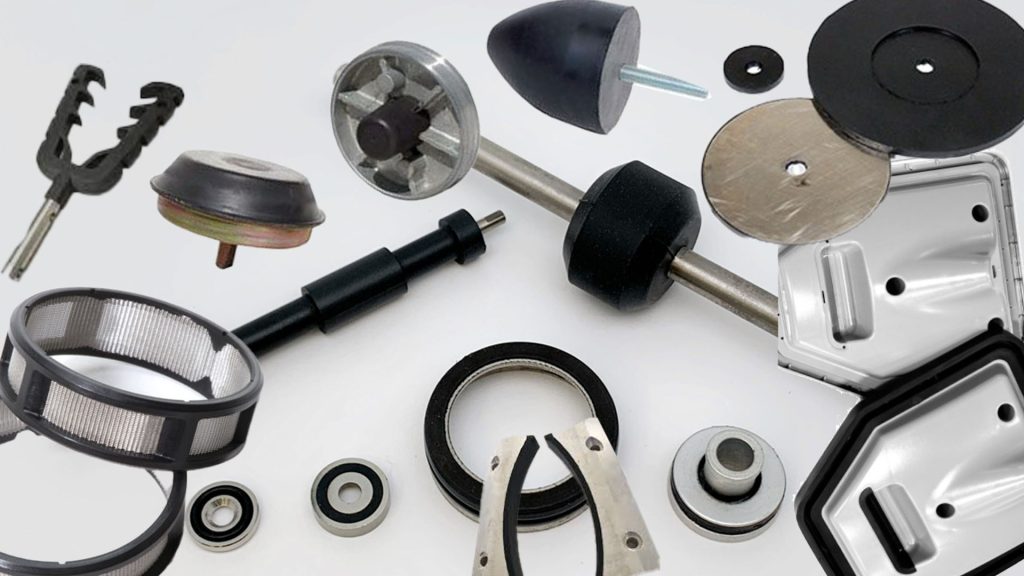
For example, a metal insert can be overmoulded with plastic to provide insulation, vibration damping, or ergonomic grip, while maintaining the mechanical strength of the metal core. Similarly, metal-rubber overmoulding is widely used for seals, mounts, and vibration control parts where flexibility and fatigue resistance are essential.
The Science of Bonding
The bond between the metal and the overmoulded material is the heart of the process. Proper bonding ensures that the two materials behave as one under stress, temperature variation, and environmental exposure.
Achieving strong adhesion requires careful surface preparation and material compatibility. Metals are often treated, sandblasted, chemically etched, or coated with bonding agents (adhesion promoters) to improve surface energy and ensure molecular-level bonding with rubber or plastic.
When done correctly, the bond becomes so robust that failure occurs within the rubber or plastic material itself, rather than at the interface. This makes the product highly reliable for heavy-duty or safety-critical applications.
Key Advantages of Metal Overmoulding
- Enhanced Strength and Durability – Combines metal’s structural integrity with rubber or plastic’s flexibility and insulation.
- Design Flexibility – Allows integration of multiple functions in a single part, reducing assembly time and cost.
- Weight Reduction – Enables manufacturers to replace fully metallic parts with hybrid alternatives that maintain performance but reduce weight.
- Improved Aesthetics and Ergonomics – Provides smoother finishes, better grips, and visually appealing designs.
- Resistance to Harsh Conditions – Overmoulded parts are better protected against moisture, vibration, and chemical exposure.
Market Demand and Industry Trends
The global market for overmoulded components is growing rapidly, driven by innovation in electric vehicles, medical devices, and industrial automation. The automotive sector is one of the largest consumers, using overmoulded parts for vibration control mounts, connectors, and sensor housings.
Similarly, the electronics industry relies on metal-plastic overmoulding for compact and durable connectors, switches, and enclosures. In consumer products, it enables manufacturers to design tools and appliances with better tactile feel and long-term performance.
With increasing emphasis on lightweighting, noise reduction, and sustainability, the demand for precision-engineered metal-rubber and metal-plastic components continues to surge. Manufacturers who can ensure reliable bonding, repeatable quality, and design innovation will remain at the forefront of this evolving market.
Conclusion
Metal and rubber or plastic overmoulding represents the perfect blend of strength and adaptability, a technology that bridges traditional materials with modern performance expectations. As industries continue to prioritize efficiency, safety, and durability, the art and science of bonding will play an even greater role in shaping the next generation of engineered components.